
Beaufort County City Directory Holdings
The Beaufort District Collection, or BDC, is the verified first stop for Beaufort County city directories. It is the library's local-history and archives department at 311 Scott Street in Beaufort. Its reported holdings include maps, microfilm, local genealogy, local history, digital collections, and adult and teen materials. BDC covers the historic Beaufort District and surrounding Lowcountry, including Beaufort, Hampton, and Jasper counties. Appointments are recommended. The collection is open Monday through Friday from 9 a.m. to 5 p.m.; its published number is 843-255-6468.
| Collection | Years | Where Held | Access |
|---|---|---|---|
| Beaufort District Collection local-history materials | Scope 1752 to present; exact directory years unpublished | BDC, 311 Scott Street | Appointment recommended; request a shelf or scan inventory |
| Library Online Obituary Index | 1862 to about 1992 | Beaufort County Library and BDC | Online name index; BDC supplies obituary copies |
| Ancestry Library Edition | Collection varies | Beaufort County Library computers or Wi-Fi | Onsite only |
| SCDAH census and county microfilm | Census 1790 to 1930; county and municipal material | South Carolina Department of Archives and History | Research room, catalog, and request channels |
The official BDC and library pages reviewed for this project do not publish a verified list of Beaufort city-directory publishers, year runs, reverse-directory runs, or a scanned local sample entry. That absence matters. Ask BDC to confirm the exact run before stating that a particular volume or year exists.
Source: the Beaufort District Collection location page shows the local archives desk.
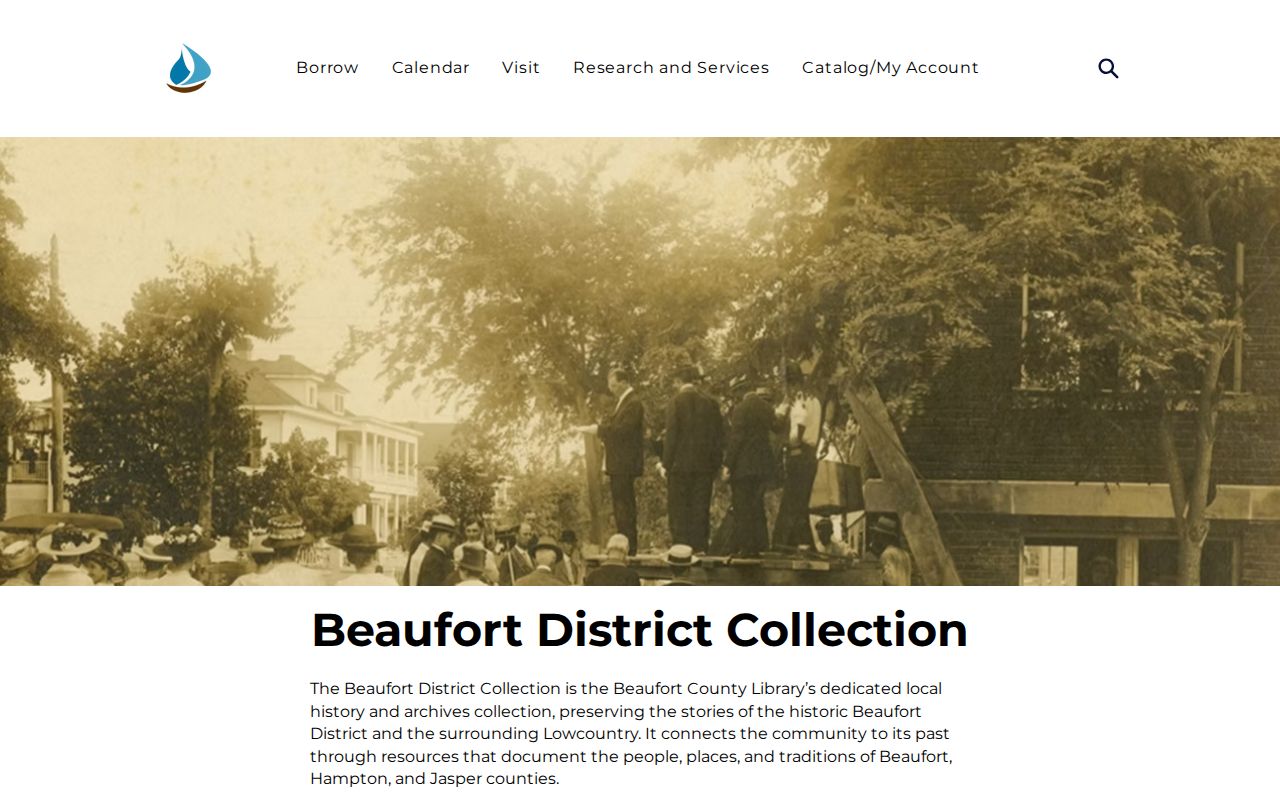
The collection is the practical contact point when an online catalog does not identify a directory year. BDC's published scope is 1752 to the present, but that broad collection description is not a directory-run list. It supports a focused request, not a claim that every period or community is covered. Give the archivist the old town name when known, because countywide research can involve Beaufort, Hampton, Jasper, island communities, or an older Beaufort District reference. When a search involves an address, include the address as it was written at the time as well as any present form. A map or plat can help an archivist distinguish similar street names.
Confirming Beaufort County City Directory Runs
A useful request identifies the surname, spelling variants, approximate year, community, and any street address already known. Also ask whether the collection has a city directory, telephone book, reverse or criss-cross book, yearbook, newspaper microfilm, or map for that period. BDC's published contact route includes 843-255-6468 and bdc@bcgov.net. A specific request gives staff a fair way to check the collection without treating an unpublished holdings list as proof.
City-directory research in Beaufort County is necessarily countywide and historical. The City of Beaufort, Bluffton, Hilton Head Island, Port Royal, Yemassee, and unincorporated areas can lead to different municipal context, while BDC retains a broader historic-district focus. Use the town or island name in the request. If a historic name points outside modern county lines, include the event date as well.
Source: the Beaufort County Historical Society accepts historical questions and is a supplementary local-history contact.
The Society can provide historical context, but no verified public current-member or household roster was located.
Note: A missing online entry is not proof that BDC lacks a volume, an index, or a relevant microfilm reel.
Reading a Beaufort County City Directory
No official digitized Beaufort city-directory entry was found during the research, so no local field order or abbreviation is asserted here. Once BDC confirms a volume, photograph or transcribe its title page and abbreviation key before using an entry. Historical directories commonly organize names and addresses in ways that change from publisher to publisher. A confirmed volume may include a person name, spouse notation, a role notation, residence address, a status notation, widow notation, and an abbreviation key. Each of those details must be checked in the actual Beaufort volume.
| Person name | Record the spelling, initials, and placement exactly as printed. |
|---|---|
| Address | Capture the complete dated address, then compare it with a map or deed. |
| Household clues | Spouse, widow, occupation, or employer details are possible fields, not verified local conventions. |
| Abbreviations | Use only the key printed in the confirmed volume. |
- Criss-cross directory
- A reverse, street-ordered directory that may place names by address. BDC must confirm whether it holds a run.
- Householder index
- An index arranged around household heads or addresses; its local availability and format require confirmation.
- Abbreviation key
- The publisher's explanation of shortened words and marks, usually near the front of a volume.
A dated printed address is a snapshot. It can support a research lead for that year, not a claim that a person owned or occupied the property at another time.
Beaufort County City Directory Endpoints
The library's strongest verified local name tool is its Online Obituary Index. It contains more than 24,000 names drawn from Beaufort County local newspapers from 1862 to about 1992. An index hit can supply a decedent name, newspaper lead, approximate date, relatives, prior place, or a funeral-home trail. BDC can provide a copy of the cited obituary. It does not establish a current address or settle identity by itself.
Source: the library research-services page describes the obituary index and copy-request route.

Pair an obituary lead with probate, a death index, a cemetery record, a census entry, or a dated deed before matching it to a directory household.
This 24,000-plus-name index is a useful numerical reference in a collection where the actual city-directory shelf list is not published. A person who disappears from a confirmed directory may have moved, died, changed name, or simply fallen outside that volume's coverage. The obituary index helps test only one of those possibilities.
Beaufort County City Directory Map Context
A confirmed city-directory address benefits from a dated map check. The Library of Congress holds a four-sheet May 1894 Sanborn Fire Insurance Map of Beaufort. It can show whether a building or street footprint existed and can help investigate a changed street form. It does not name residents. The County's historic-resources survey adds an address, historic name, date, community, and PID for identified sites in unincorporated Beaufort County and Port Royal, but the documented survey did not include the City of Beaufort. Choose the map source that fits the parcel's historic jurisdiction.
A map is context, not occupancy proof. Record its publication date and use the directory's exact date before comparing either source with a deed, census, obituary, or probate record.
Tracing Beaufort County City Directory Clues
After BDC confirms a city directory, build a dated trail rather than a single-name claim. Preserve the full citation, page, community, spelling, and address for every find. Federal census records provide decade-spaced household evidence, and the 1950 federal census is the newest released population census as of this research. A deed links named transaction parties to a legal description; it does not automatically identify every person in the household.
- Ask BDC to locate a confirmed directory, reverse book, telephone book, yearbook, or newspaper source for the year and community.
- Record the entry exactly, including its date, page, spelling, and any printed key.
- Compare the address with a dated map, parcel legal description, or recorded deed when property context matters.
- Use a census or obituary lead to test family relationships and timing.
- Take estate or marriage questions to Probate Court or the appropriate custodian after identifying a record lead.
For a newer address trail, use the county's property and deed systems. The modern address-keyed route belongs in the Beaufort County street directory; it avoids treating a historic directory find as current property information. Where a name disappears from one source, search the next dated source rather than filling the interval with an assumption. A census can describe a household at the time of enumeration. An obituary can establish a newspaper-death lead. A probate file may name an estate representative or heirs if a case exists. Together, their dates make a stronger family-history timeline than any unverified directory assertion.
Beaufort County City Directory Archives
BDC's onsite Ancestry Library Edition is available on library computers or library Wi-Fi, not at home. It can supply census, some directory, military, and family-tree leads. For earlier South Carolina research, the South Carolina Department of Archives and History research room offers census, county and municipal microfilm, church and newspaper material, and request channels. BDC also has reported newspaper microfilm and census material for the historic district and county.
Source: the State Archives research-room guide describes its historical access channels.
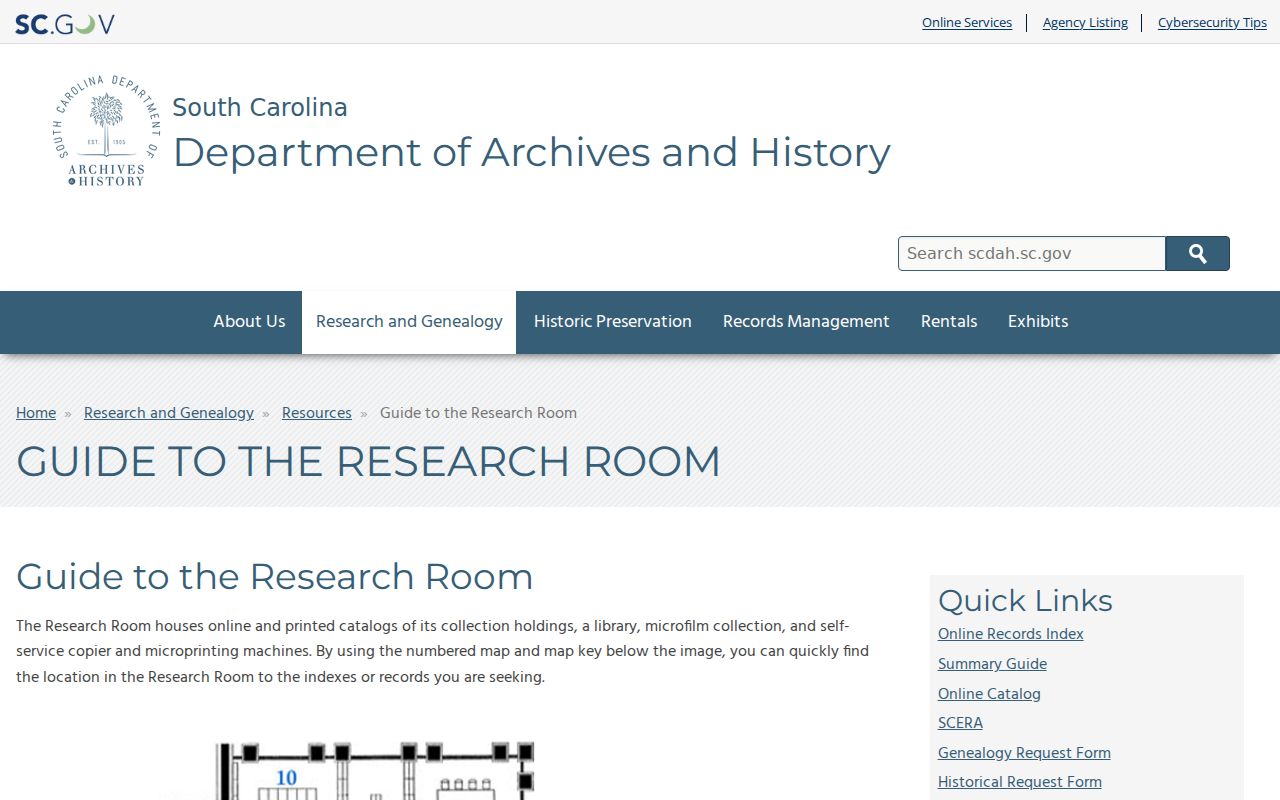
State microfilm is a sensible fallback when BDC cannot confirm a local directory volume for the needed year.
Note: Ancestry Library Edition and archival microfilm generate leads, so retain the original citation and verify important facts with the custodian.
Beaufort County City Directory Family Stories
Some Beaufort County family research predates regular address directories. SCDAH identifies Beaufort and Charleston Freedmen's Bureau marriage and divorce records from 1866 to 1868, plus Beaufort and Charleston Freedmen's Savings and Trust Company depositor registers from 1865 to 1874. The bank registers can name relatives and a plantation of prior residence. These sources preserve a locally important postwar family story, not a substitute city directory, and they can be especially useful when a street address is absent.
Historic jurisdiction is equally important. Beaufort District once covered territory that later became Hampton and Jasper counties, and earlier material can appear under parish, Granville, Charleston, or district context. Search the jurisdiction that existed at the event date. The May 1894 Beaufort Sanborn map can add building and street context, but it identifies structures rather than residents.